This article was originally written in German and published in February 2022. It has been translated and adapted for English-language readers.
Hubertus Heil served as Federal Labour Minister of Germany from 2018 to 2025. All references to him in this article reflect his role at the time of the award ceremony in February 2022.
Contents
The Moment
The Civic Innovation Platform is Germany's federal initiative for social and technological innovation in the world of work. Launched by the Federal Ministry of Labour and Social Affairs, it selects ideas that demonstrate what technology can accomplish when it is oriented toward society rather than just the market.
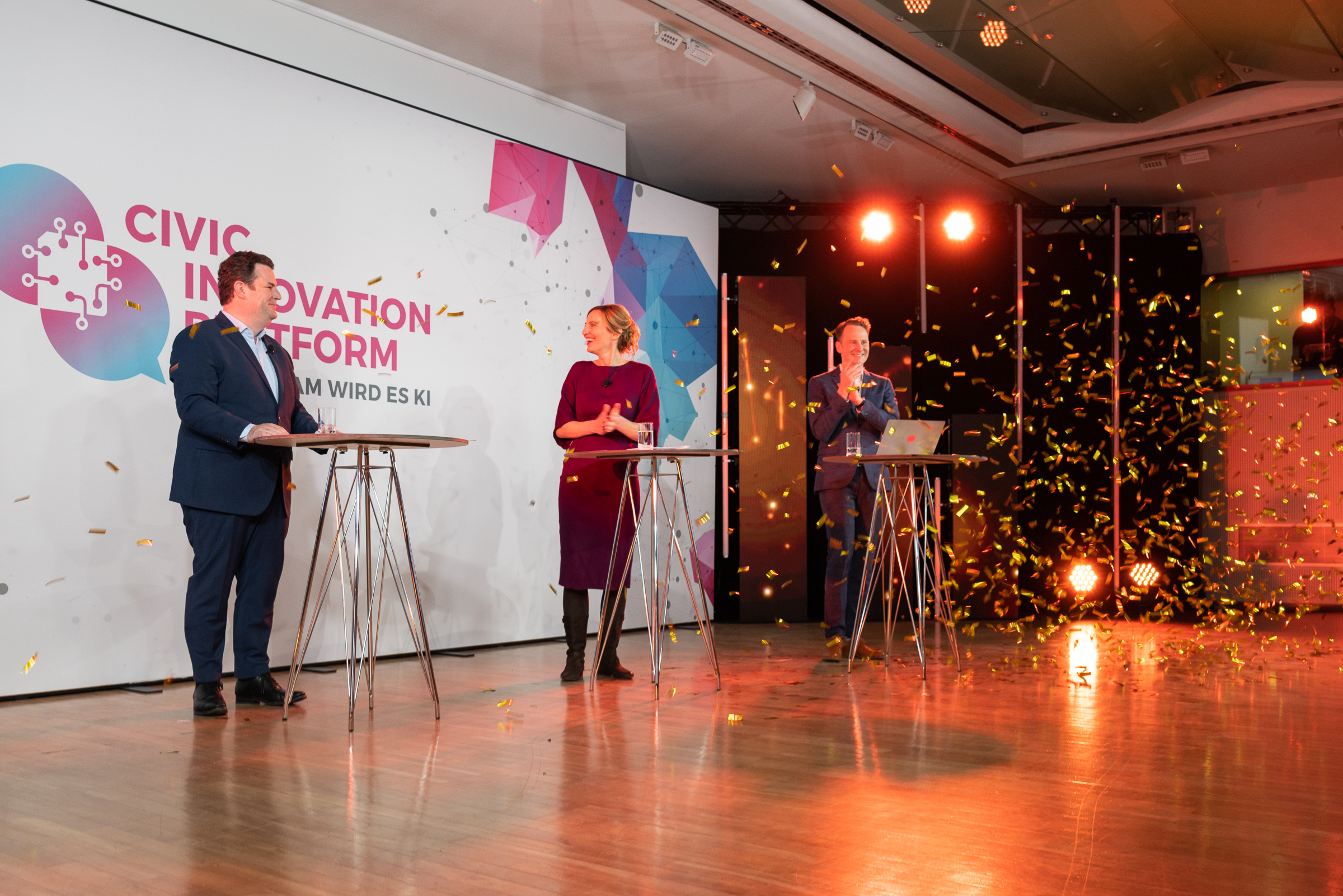
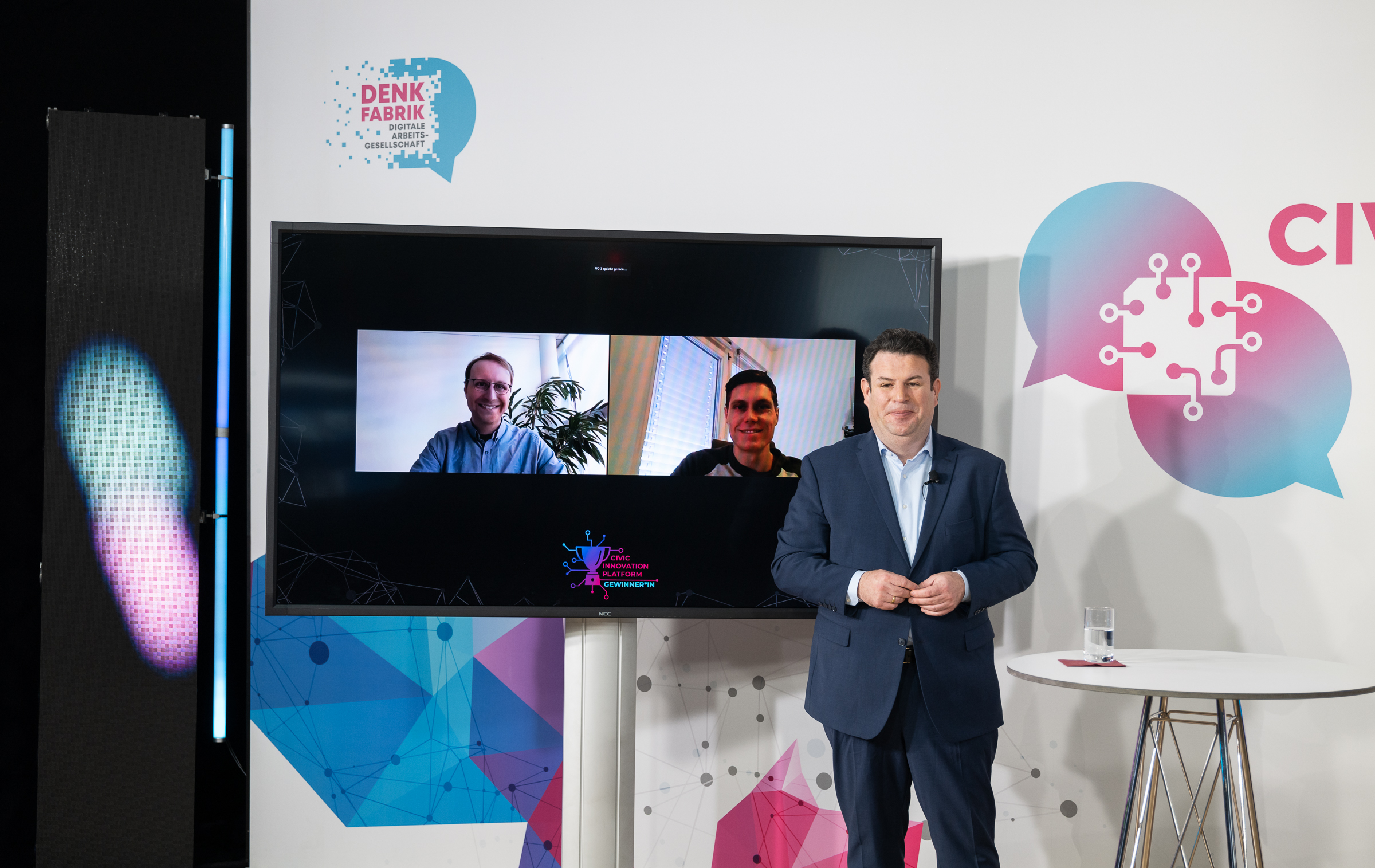
On 8 February 2022, Federal Labour Minister Hubertus Heil stood before the second cohort of winners — twelve teams whose proposals had passed a rigorous national selection. Journalists, public officials, and fellow innovators filled the room. Among the twelve: BIRNE7, recognised for developing an inclusive AI learning assistant — a system designed to do something deceptively simple: make digital learning work for everyone, without asking people to first declare themselves as needing accommodation.
BIRNE7 was selected from a national pool of applicants by the Civic Innovation Platform — a programme of the Federal Ministry of Labour and Social Affairs (BMAS) — at the second award ceremony in February 2022.
The Problem We Were Solving
Access to digital learning has expanded dramatically in recent years. But expansion is not the same as inclusion.
Most learning platforms are built for the median user — someone without cognitive, sensory, or motor differences that would change how they interact with digital content. For everyone else, the experience ranges from frustrating to completely inaccessible. Content arrives in formats that screen readers cannot parse. Videos play without captions. Interactive elements require precise mouse control. Navigation assumes a level of digital literacy that not everyone has.
The result is a system that, despite being described as open and digital, recreates the same exclusions it was supposed to break. Technology moved fast. Inclusion did not keep pace.
This gap is not inevitable. It is a design choice. And design choices can be changed.
What the Assistant Actually Does
The inclusive AI learning assistant developed by BIRNE7 and Decentrale GbR operates as an integration layer — it connects to existing digital learning platforms rather than replacing them. The goal was not to build something parallel to the existing infrastructure. It was to make what already exists more accessible to more people.
Analyses how each user engages with content and recommends learning materials suited to their pace, context, and preferences — without requiring self-identification.
Identifies content within the platform that does not meet accessibility standards — missing alt text, uncaptioned video, complex navigation — and surfaces this to administrators.
Builds an understanding of what works for a particular user over time, improving recommendations without sharing personal data with third parties.
The design principle behind all three functions is the same: do not require the user to declare a disability or need in order to receive a better experience. The assistant serves everyone, and improves for everyone, by default.
Built with Decentrale GbR
The project was developed in collaboration with Decentrale GbR, a partner whose technical depth in AI and platform integration matched BIRNE7's focus on barrier research and inclusive design.
The collaboration mattered. BIRNE7 brought the problem framing: direct knowledge of the barriers people experience, built through years of co-creation with people who navigate inaccessible digital environments every day. Decentrale brought the technical execution: the ability to translate that problem definition into an architecture that could actually run at scale.
That combination — grounded problem definition meeting rigorous technical execution — is how the project moved from concept to a working prototype evaluated on real platforms. It is also the model BIRNE7 believes in: not designing for people with access needs from the outside, but designing with them, from the first question.
What the Minister Said
„Beim Fortschritt geht es nicht nur um das technologisch Machbare und ökonomisch Wünschenswerte. Es geht darum, die Chancen der Digitalisierung so zu nutzen, dass sie auch der Gesellschaft dient."
"Progress is not only about what is technologically possible and economically desirable. It is about using the opportunities of digitisation in a way that also serves society."
— Hubertus Heil, Federal Labour Minister, 8 February 2022
This framing sits at the centre of what BIRNE7 does. Technology is not neutral. Its effects depend entirely on who it is designed for — and who is left out of that design process. An AI system that learns to recommend content without first ensuring that content is accessible is not a step forward. It is a more efficient version of the same barrier.
His words were directed at the full field of civic technology. But they articulate something BIRNE7 has operated from since the beginning: that technical capability and commercial viability are not sufficient criteria for judging whether a technology is worth building. The question is whether it serves the full range of people who need it.
What This Recognition Means
Being selected by the Civic Innovation Platform is not simply a validation of a single project. It is a signal about what public institutions recognise as worth doing — and worth funding.
For BIRNE7, the award confirmed something the team had long believed: that the problems we were working on — the invisible barriers, the exclusions built into everyday digital infrastructure — were not niche concerns. They were central to the question of whether digital transformation would produce a more inclusive society, or a more efficient reproduction of existing hierarchies.
The assistant is a prototype. There is more to build, more to test, and more barriers to document before it becomes the kind of integrated, scalable tool that can change how platforms think about accessibility by default. But the recognition from the Civic Innovation Platform opened doors — to partnerships, to conversations with platform operators, and to the broader public debate about what AI should actually be for.
The inclusive AI learning assistant represents one approach to the problem of digital accessibility. BIRNE7 continues to develop, document, and share barrier research — because the most valuable contribution we can make is not always a finished product. Sometimes it is a precisely described problem that someone else can act on.
If you work on digital learning platforms and want to explore what an integration could look like, get in touch.